Anxiety vs Intuition: What your body is trying to tell you
Jun 14, 2026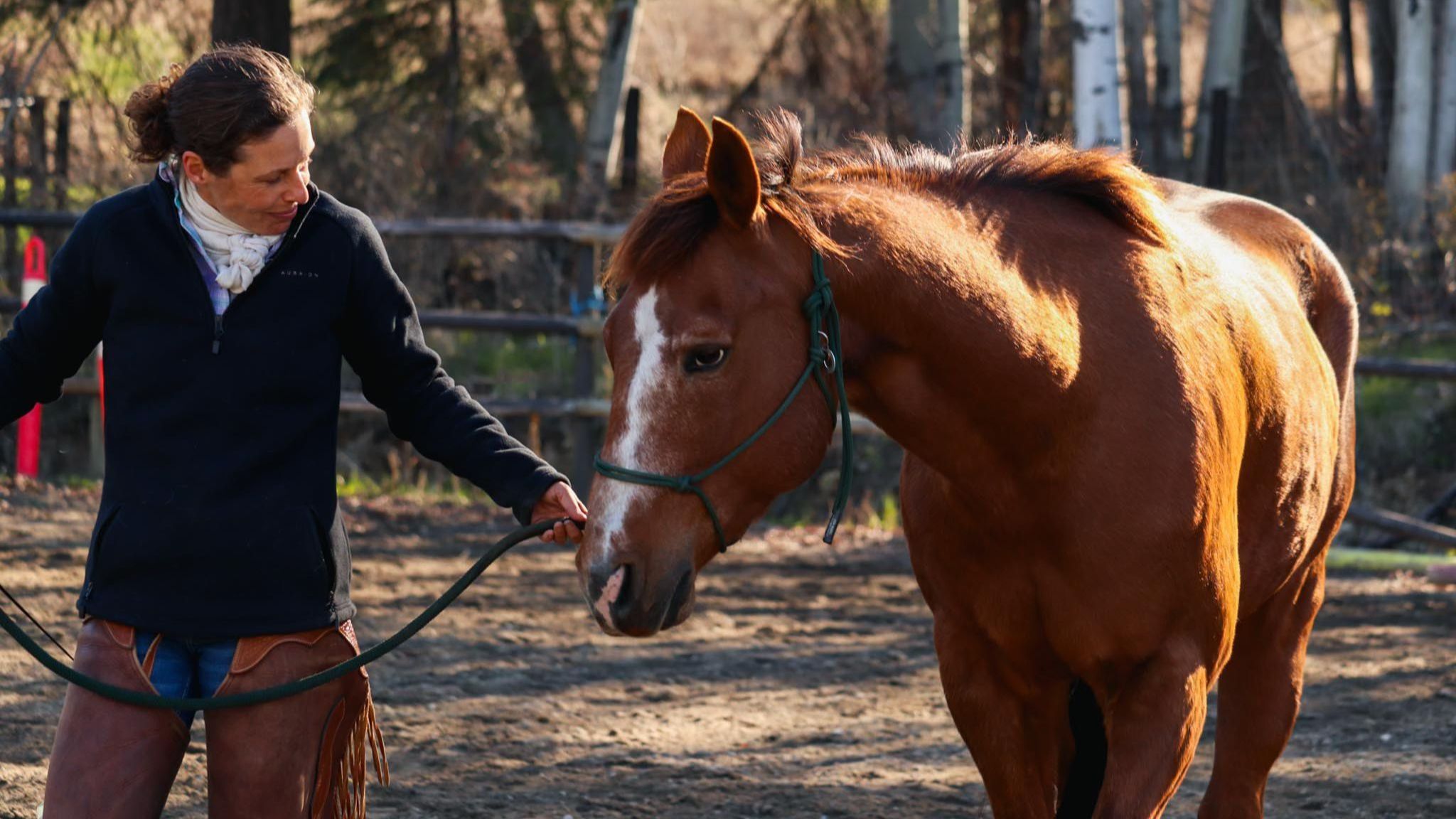
Sometimes intuition and anxiety feel exactly the same around horses. Your horse picks his head up and suddenly your stomach drops. Is he about to spook, or is he just looking around and taking things in? Are you reacting to something that’s actually happening right now, or are you bracing for a past experience that isn’t happening anymore? And when you hear that little voice saying, “Maybe you shouldn’t ride today,” is that your anxiety listing all the what‑ifs, or your intuition quietly trying to keep you safe?
In those moments, the best thing you can do is slow everything down. Just pause for a second and check in with yourself and your horse. Take a few deep breaths and notice what’s going on in your own body. Is your heart racing? Are your shoulders up by your ears? Are you holding your breath or clenching your jaw? Then look at your horse. Is he actually dysregulated—tight muscles, quick little steps, eyes wide, breathing fast—or is he just casually looking around, ears flicking, maybe a bit curious but not really tense?
Give it a few minutes and see if anything shifts. Maybe you walk a few circles in hand, do a bit of simple groundwork, or just stand together and breathe. Does your horse start to lick and chew, lower his head, blow out, or settle into a softer walk? Do you feel your own body start to loosen up, even just a little? If both of you start to relax but your brain is still replaying an old fall or a scary ride from years ago, that’s a good sign that what you’re feeling is mostly anxiety pulling from the past rather than what’s happening right now.
Anxiety usually feels loud and busy. It’s the spiraling, what‑if thinking: What if he spooks at that corner? What if he bolts? What if I fall? Your mind is jumping to every possible thing that could go wrong, even when your horse is actually looking pretty reasonable in the moment. It’s not wrong or bad—your nervous system is just trying to protect you with old information. The problem is, it doesn’t always match what’s really going on in front of you.
Intuition, on the other hand, usually feels quieter and more grounded. It’s that calm but persistent feeling of “I don’t want to do this right now” or “Something’s just not right today,” without a huge thought spiral attached. Maybe you lead your horse to the mounting block and he’s not blowing up, but he feels just a little too wired, a little too pushy through his shoulder, a little too checked out. Nothing dramatic, but your body gives you that steady nope. You might not be able to explain it in a way that would convince someone else, but it’s very clear to you.
It’s also worth saying that if you’ve had some big or scary experiences in the past, your “gut” can feel pretty intense at times too. That doesn’t mean you’re broken or that your intuition doesn’t count unless it’s whisper‑quiet. It just means your body takes safety seriously. The key is to slow down and ask: Where am I feeling this in my body, and what is my horse actually doing that contributes to this feeling? For example, if your horse is drifting his shoulder into you every time he looks at something, and you’re worried about getting stepped on, that’s not just random fear—that’s useful information. Being uneasy about that makes sense. It’s something you can work on, like doing some groundwork to unlock the shoulders and get his focus back with you before you add more pressure.
Both anxiety and intuition are trying to tell you something. Neither one is the enemy. They’re just different kinds of information. Once you start getting curious—What’s happening in me? What’s happening in my horse? What changed after a few minutes?—you can make a plan instead of feeling like you have to power through or quit altogether. Maybe the plan is: stay on the ground today. Maybe it’s: ride, but keep it short and simple. Maybe it’s: do some lateral work in hand and come back to riding another day.
If you notice that your anxiety just keeps ramping up no matter what you do, that’s a really good time to bring in some help. Having someone you trust on the ground—a trainer, a friend, a coach—can make a huge difference. They can tell you, “Hey, your horse actually looks pretty relaxed right now,” or, “Yeah, I see what you’re feeling, he is a bit on the muscle today, let’s adjust the plan.” That kind of support gives your nervous system a break and lets you process what you’re feeling without the pressure of “just get on and push through.” Sometimes our anxiety is trying hard to prevent us from reliving something painful. Ignoring it usually just makes it louder. Acknowledging it, putting some practical steps in place, and getting support can help it soften over time.
There are also times when talking with a professional—whether that’s someone who specializes in rider mindset, a therapist, or a very thoughtful coach—can help you untangle what’s going on underneath all of this. Other times, the work is more gradual: going day by day, step by step, giving yourself permission to go slow, and letting trust rebuild. Trust in yourself, trust in your horse, and trust that you can listen to those internal signals without letting them run the whole show.
You don’t have to choose between white‑knuckling your way through rides or never riding again. There’s a middle ground where you pause, check in with yourself and your horse, listen to both anxiety and intuition as information, and then make a choice that honours safety and connection. Over time, you’ll start to recognize the pattern: this is my anxious brain replaying the past, and this is my intuition quietly flagging something in the present. And when you can tell the difference, you can respond in a way that supports both you and your horse.
-B